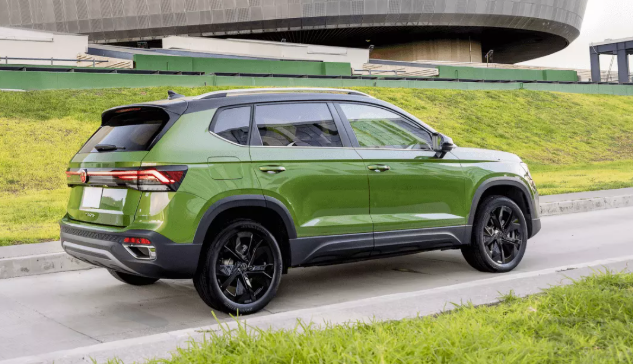
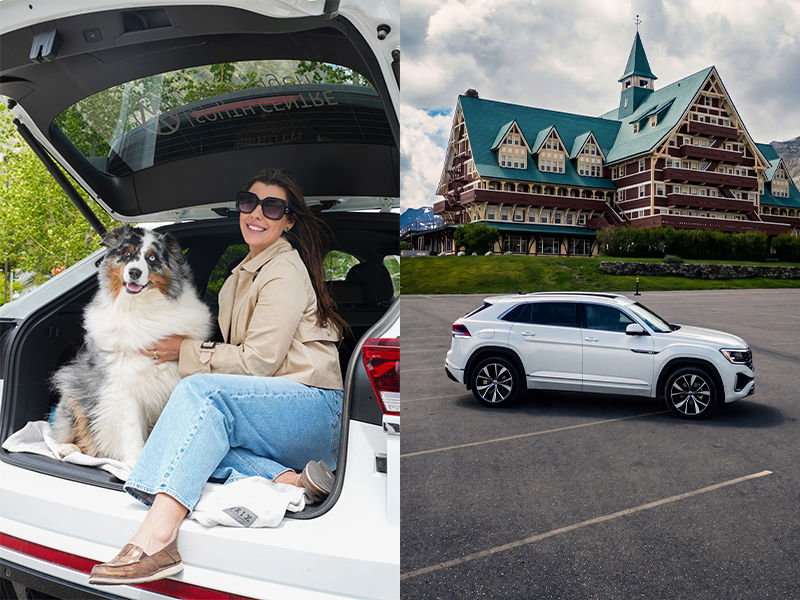
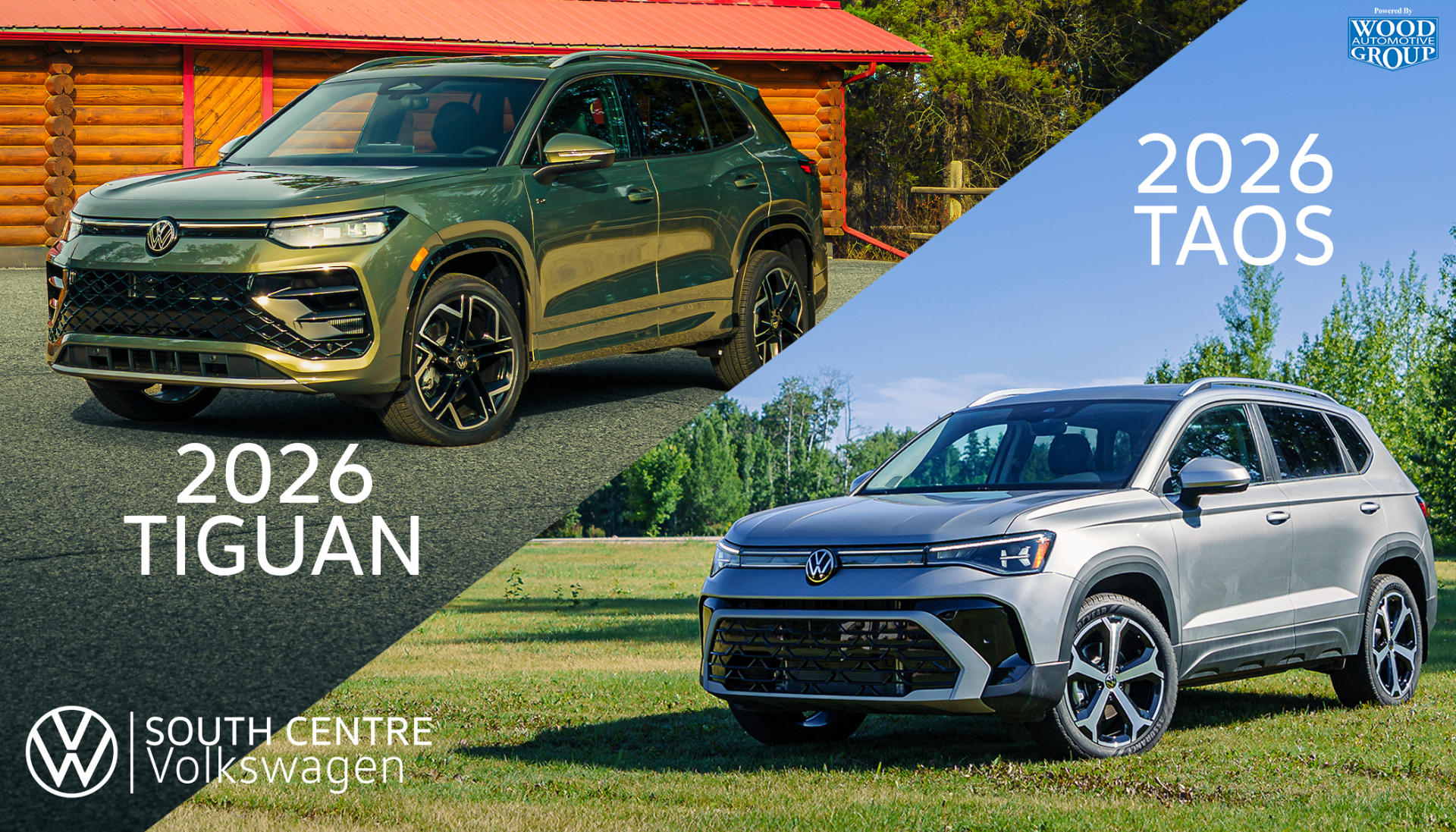
Volkswagen’s SUV family gives buyers two distinct choices in the compact segment: the well-rounded, efficient 2026 Taos, and the larger, more robust 2026 Tiguan. While they share certain styling cues and engineering DNA, these vehicles are designed to meet very different priorities.
This article goes beyond surface-level specs. It’s a lifestyle-driven comparison that explores how each vehicle performs, feels, and functions in the real world — helping you decide which one belongs in your driveway.
Philosophies Behind the Designs
The Volkswagen Taos was introduced as a subcompact-plus SUV aimed at efficiency-minded urban dwellers and small families. It brings the practicality of a compact crossover, but with a leaner profile and a focus on maximizing value per dollar.
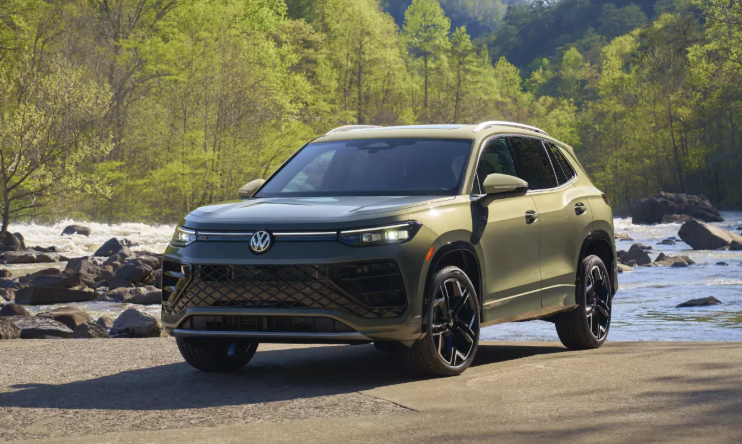
The Volkswagen Tiguan, on the other hand, has evolved into a more premium-feeling compact SUV. It’s slightly longer, wider, and heavier, offering a stronger engine, a more mature ride quality, and additional passenger comfort. It's the better choice for those who prioritize interior space, power, or longer road trips.
Engine Performance: Responsiveness vs. Strength
The Taos and Tiguan are both turbocharged, but their powerplants are tuned for different outcomes.
Taos: Compact Turbo for Urban Agility
- Engine: 1.5L Turbo I-4
- Horsepower: 174 hp @ 5,500 rpm
- Torque: 184 lb-ft @ 1,750 rpm
This smaller displacement engine is engineered for efficiency and light-footed driving. It accelerates briskly around town and is easy to maneuver in traffic or crowded parking lots. Because its torque comes in early, the Taos rarely feels underpowered in everyday situations — especially when driving solo or with light cargo.
Tiguan: More Muscle for Open Roads
- Engine: 2.0L Turbo I-4
- Horsepower: 201 hp @ 5,000 rpm
- Torque: 221 lb-ft @ 1,500 rpm
With an extra 47 lb-ft of torque delivered even sooner than the Taos, the Tiguan responds instantly to throttle inputs. This is particularly noticeable at highway speeds or when the vehicle is fully loaded. Whether you’re climbing steep roads, towing a small trailer, or simply merging into fast-moving traffic, the Tiguan delivers a smoother, more confident drive.
Fuel Economy: Efficiency or Trade-off?
Here’s where the Taos really shines. Its smaller engine and lighter curb weight give it a significant edge at the pump.
| |
2026 Taos
|
2026 Tiguan
|
|
City
|
8.3 – 9.4 L/100 km
|
10.5 L/100 km
|
|
Highway
|
6.4 – 7.2 L/100 km
|
7.8 L/100 km
|
|
Combined
|
7.4 – 8.4 L/100 km
|
9.3 L/100 km
|
If you're a commuter or someone who racks up kilometers annually, the fuel savings from the Taos can add up quickly. The Tiguan, while less frugal, still performs respectably for a compact SUV with its level of output.
Real-World Interior Use: Who Rides in the Back?
This is one of the key differentiators between the two. The Tiguan is the clear winner when it comes to rear-seat passenger comfort.
|
Interior Dimensions (Rear Seat)
|
Taos
|
Tiguan
|
|
Legroom
|
963 mm
|
1,021 mm
|
|
Headroom
|
Up to 1,011 mm
|
Up to 1,008 mm
|
|
Shoulder Room
|
1,402 mm
|
1,415 mm
|
The Tiguan’s extra 58 mm of rear legroom gives adults and taller teens the freedom to stretch out. It’s ideal for families, rideshare drivers, or anyone regularly carrying more than two passengers. The extra shoulder space also makes it more comfortable with a full rear bench.
In contrast, the Taos is better suited for smaller families, couples, or urban commuters who don't often have adult passengers in the back seat.
Cargo Space and Flexibility
Here’s where the comparison gets a bit surprising.
|
Cargo Volume
|
Taos
|
Tiguan
|
|
Behind Second Row
|
705 – 790 litres
|
750 litres
|
|
Maximum (Seats Folded)
|
1,705 – 1,866 litres
|
1,668 litres
|
Despite being smaller overall, the Taos offers more total cargo volume when the rear seats are folded down — especially in AWD variants with efficient layout. This makes it an excellent pick for those who haul gear frequently, from camping equipment to sports gear to flat-pack furniture.
The Tiguan, with its slightly more traditional cargo layout, offers easier loading and unloading, but its maximum volume is a bit more limited due to rear packaging and drivetrain configuration.
On the Road: Urban vs. Highway Balance
Taos Driving Experience:
- Feels light and nimble
- Easy to park and thread through tight streets
- Steering is light, which makes it user-friendly but less confidence-inspiring at higher speeds
- Less road noise due to smaller wheels and better fuel-focused tires
Tiguan Driving Experience:
- Feels more planted and refined
- Stronger torque and acceleration for long distances
- Quieter on the highway
- Heavier steering adds a sense of control at speed
For city life, the Taos is easier to live with. For long-distance travel or daily highway commuting, the Tiguan feels more mature and settled.
Features and Tech
Both vehicles share Volkswagen’s modern suite of in-cabin technology and safety:
- Digital Cockpit instrument display
- Touchscreen infotainment with wireless Apple CarPlay/Android Auto
- Available IQ.DRIVE assistance system (includes lane assist, adaptive cruise, emergency braking)
- Heated front seats standard on most trims
- Panoramic sunroof and ambient lighting on upper trims
The Tiguan, however, tends to offer more premium features like:
- Power tailgate
- Upgraded audio systems
- Larger infotainment displays in more trims
- Optional ventilated front seats
Pricing and Value
While exact Canadian pricing will vary by trim and options, the Taos starts lower across the board. You can expect to pay $3,000–$5,000 less for a similarly equipped Taos compared to a Tiguan.
That said, resale values, feature content, and interior space may justify the Tiguan’s premium for certain buyers — especially those who use their SUV for road trips or carpooling.
Summary: Which Volkswagen SUV Matches Your Life?
Here’s a quick decision matrix:
|
Your Priority
|
Recommended Model
|
|
Fuel efficiency
|
Taos
|
|
Rear-seat comfort
|
Tiguan
|
|
Lower purchase price
|
Taos
|
|
Long-distance comfort
|
Tiguan
|
|
City parking & tight spaces
|
Taos
|
|
More power underfoot
|
Tiguan
|
|
Occasional cargo hauling
|
Taos
|
|
Frequent family road trips
|
Tiguan
|
Final Thoughts
The 2026 Volkswagen Taos and Tiguan offer two excellent — and very different — solutions for SUV buyers. The Taos is sharp, efficient, and surprisingly spacious, ideal for younger drivers or smaller households. The Tiguan, meanwhile, steps in with more comfort, performance, and space for those who want a more robust daily driver.
No matter which one you choose, you’re getting Volkswagen’s signature build quality, refined styling, and modern tech — just in two very different packages.